Why the Scale Misses the Most Important Health Signals
For many people, the scale has become the primary measure of health. But while it’s easy to read, it often misses the changes that matter most—especially as we age. Muscle loss, hormonal shifts, and metabolic changes can all occur while the number on the scale stays the same, quietly shaping how we feel, function, and age over time.
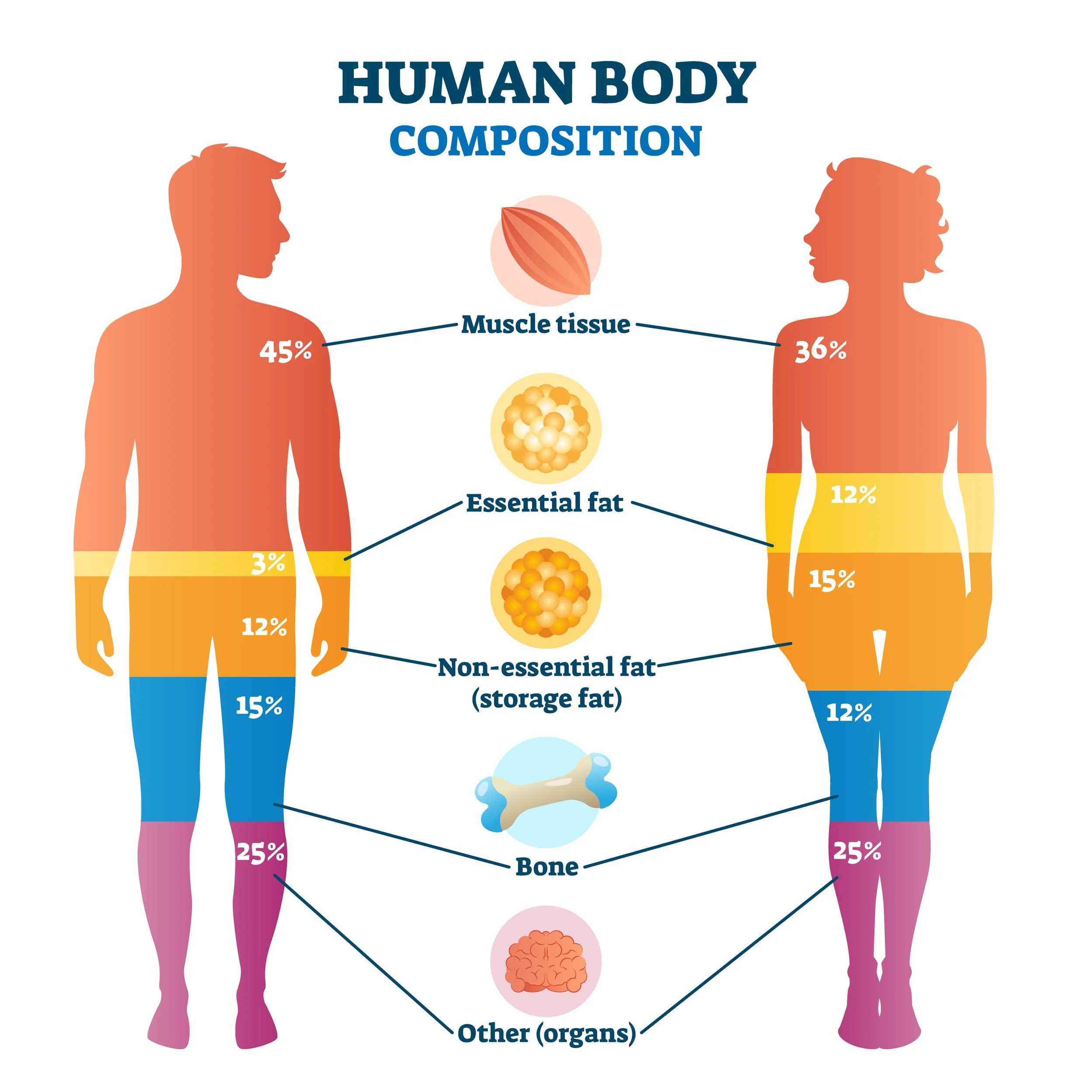
Body composition—what we’re made of matters.
Two people can weigh the same and have very different health profiles. One may be strong, metabolically healthy, and resilient. The other may struggle with fatigue, insulin resistance, inflammation, or declining strength. The scale doesn’t distinguish between fat and muscle, doesn’t reflect hormonal changes, and doesn’t tell us how well our body systems are working together.
This matters because as we move through midlife, what’s happening beneath the surface becomes more important than the number itself.
One of the most overlooked drivers of long-term health is muscle mass. Muscle supports strength, balance, bone density, metabolic health, and independence. Beginning as early as our 30s, we naturally lose muscle unless we actively work to maintain it. This loss often accelerates during menopause, and with age-related declines in testosterone in some men due to hormonal changes, even when weight appears stable.
Here’s where the scale can be misleading. It’s entirely possible to lose muscle and gain fat while your weight barely changes. From the scale’s perspective, nothing seems different—but inside the body, meaningful changes are taking place that can affect energy, mobility, blood sugar regulation, and long-term resilience.
Hormones add another layer of complexity. Estrogen, testosterone, insulin, cortisol, and thyroid hormones all influence how the body builds muscle, stores fat, and uses energy. During midlife, shifts in these hormones can change body composition even when diet and exercise habits haven’t changed. Again, the scale offers no insight into why this is happening.
This is why focusing on weight alone so often leads to frustration. Many people are doing the “right” things—eating well, staying active—yet feel weaker, more tired, or less resilient over time. The issue isn’t effort. It’s that weight alone is an incomplete measure of health.
A more meaningful approach looks at what the body is actually signaling. This includes how much muscle and fat you carry, hydration status, metabolic efficiency, and indicators related to cellular health. Together, these signals provide a clearer picture of how the body is aging and where support may be needed.
This doesn’t mean weight has no value. It simply means it’s incomplete. Health is not a single number, and aging well requires a broader lens—one that looks at strength, metabolic health, and functional capacity alongside body weight.
Because aging well isn’t about chasing a number on the scale—it’s about understanding your body and building a foundation that supports you for the years ahead.
Questions to Ask Your Doctor
How does my current muscle mass compare to what’s expected for my age and sex?
Are there labs that can help explain muscle loss or weakness?
How do menopause or age-related hormonal changes affect muscle, metabolism, and bone health?
Am I getting enough protein—and is it distributed appropriately throughout the day to support muscle protein synthesis?
What type of resistance or strength training is safest and most effective for me right now?
How do sleep, stress, and recovery affect my muscle and metabolic health?
Are any of my medications or chronic conditions contributing to muscle loss or fatigue?
How should we monitor muscle health over time?
At Kirra Health, we use body composition analysis as one of several tools to help answer the question, “What is my body telling me?” By understanding changes in muscle, fat, hydration patterns, and markers that reflect cellular health, we can move beyond the scale and focus on supporting strength, function, and resilience over time.
If you’re experiencing weight-related symptoms—or want to proactively address your metabolic health—schedule a complimentary wellness consult to explore if our approach is right for you.