If you’ve noticed that your recovery from a weekend hike takes a little longer, or that carrying a heavy suitcase feels more taxing than it used to, you aren’t imagining it. For most adults, midlife is when the "slow leak" of muscle loss begins to surface.
But muscle health isn't just about how you look in the mirror. It is the single most important factor in determining whether you will spend your later years in a state of dependence or living with full autonomy. In modern longevity science, we call this your functional lifespan.
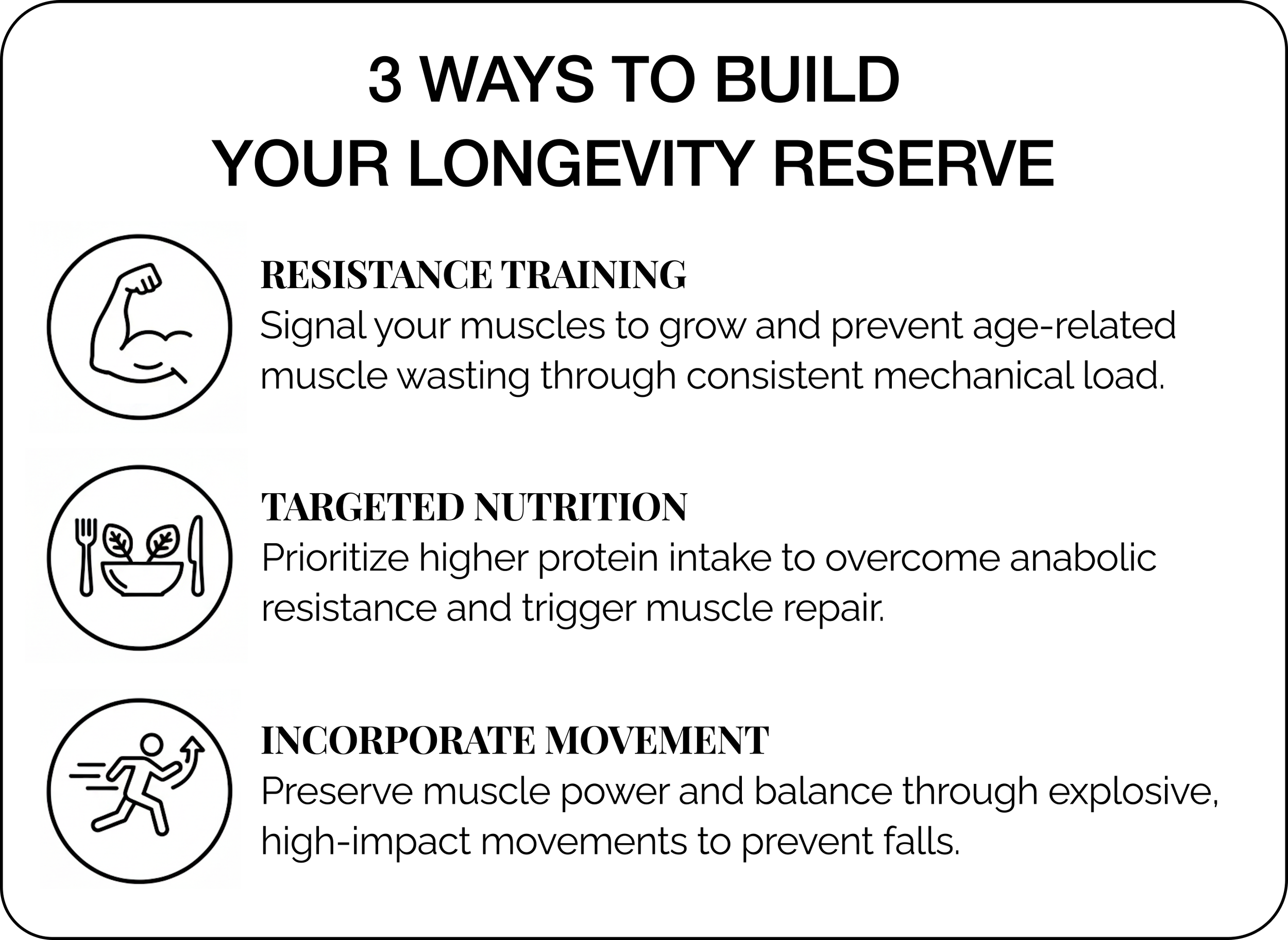
3 Ways to Build Your Longevity Reserve.
Muscle: More Than Movement
We often view muscle simply as "meat" that moves our bones. In reality, skeletal muscle is a sophisticated metabolic and endocrine organ.
When you contract your muscles, they release signaling proteins called myokines. These molecules travel through your bloodstream to reduce systemic inflammation and support brain health. Some even stimulate brain-derived neurotrophic factor (BDNF), a protein essential for memory and cognitive resilience. Beyond the brain, muscle acts as your body’s primary "glucose sink," clearing roughly 80% of the sugar from your blood after a meal.
The "Menopause Accelerator"
Muscle mass typically peaks in your 30s, followed by a loss of roughly 3–8% per decade. However, midlife women face a unique biological hurdle: menopause.
Estrogen is a powerful "anabolic" (building) hormone. When levels drop during the transition, the body loses a key signal for muscle repair. This makes the perimenopausal years a critical "inflection point" where maintaining muscle quality transitions from a fitness goal to an essential health strategy.
Why Strength is a Vital Sign
In clinical settings, two of the strongest predictors of how long—and how well—you will live are walking speed and grip strength.
We also focus on muscle power—the ability to generate force quickly. While strength helps you lift a heavy grocery bag, power is what allows your foot to shoot out fast enough to catch yourself when you trip. Power often declines faster than strength, making its maintenance the gold standard for fall prevention.
The Science of Muscle Preservation
The research highlights two primary factors that influence how the body maintains muscle as we age. The first is mechanical stimulus—the signal sent to the body during resistance exercise that it needs to keep its muscle tissue. The second is nutritional support, specifically the need to hit a higher "protein threshold" (often 25–40g per meal) to overcome anabolic resistance, the body’s declining efficiency in muscle repair.
Independence is a Choice Made Today
Independence doesn’t disappear overnight; it fades quietly as the gap between your strength and the demands of daily life narrows. It starts with a staircase that feels steeper and ends with a loss of confidence in movement.
The hopeful truth is that muscle remains adaptable at nearly any age. Research has shown that even 90-year-olds can significantly improve their strength in weeks with the right stimulus.
Longevity isn’t just about adding years to life; it’s about building the resilience to live those years on your own terms. Whether you are 45 or 75, the best time to make a deposit into your "longevity reserve" is today.
At Kirra Health, our focus is on longevity and aging well, because we believe people deserve to feel strong, energized and confident for as long as possible.
To discover how we can support your health goals, book a complimentary Wellness Consult.